The Greens Caught My Eye
The paintings that shaped Magritti.
Category
Words by
Magritti began with a simple question. What makes up my aesthetic, and could it become work that matters?
To find an answer, I went digging through my camera roll. Travelling around, whenever something struck me as the most beautiful thing in front of me, I photographed it, no matter what. It is why I have always insisted on the 1TB iPhone.
Most of what I had saved turned out to be paintings, photographed in museums. Probably because painting is the thing I can do. I cannot sculpt, and I cannot write music.
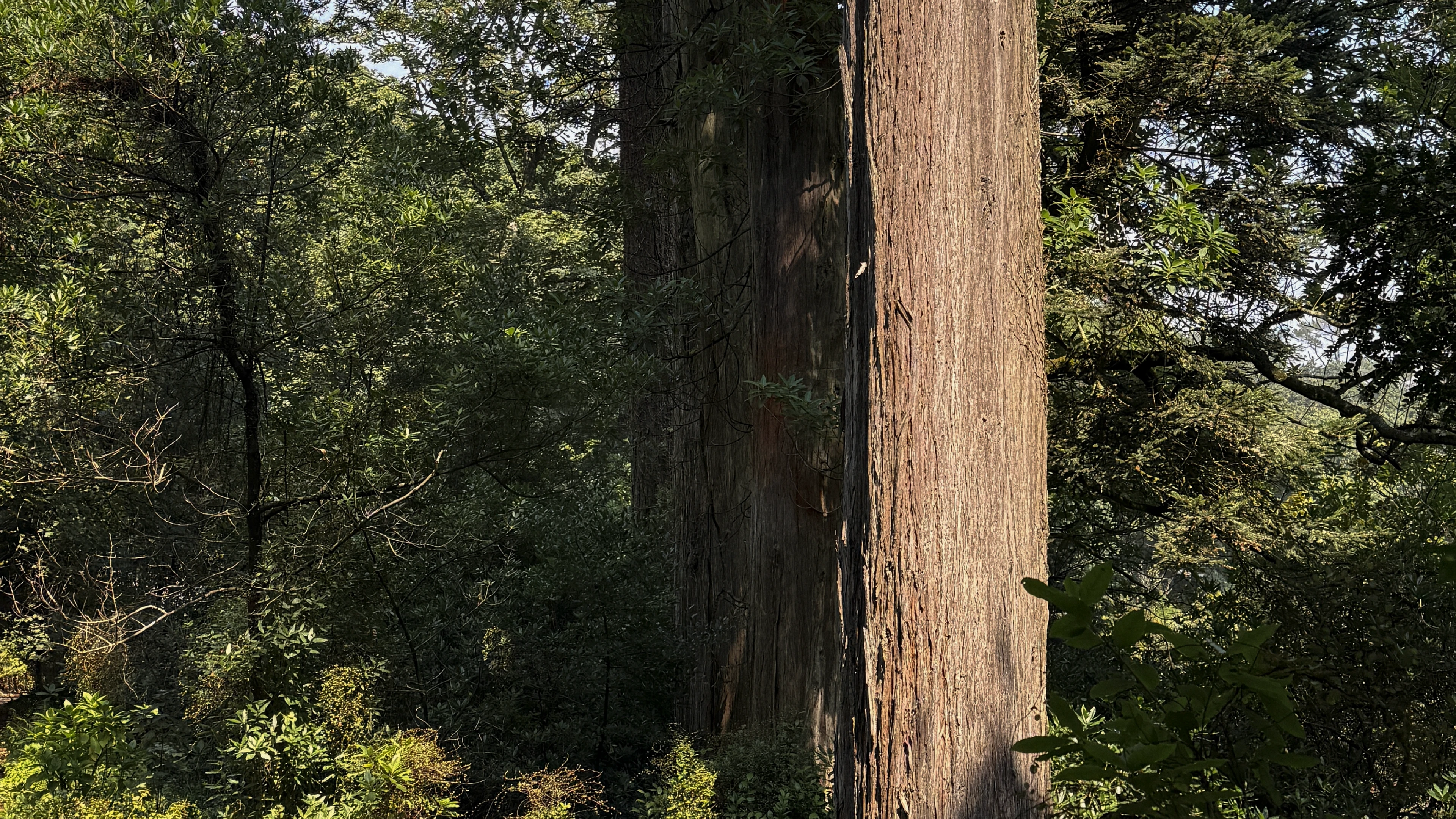
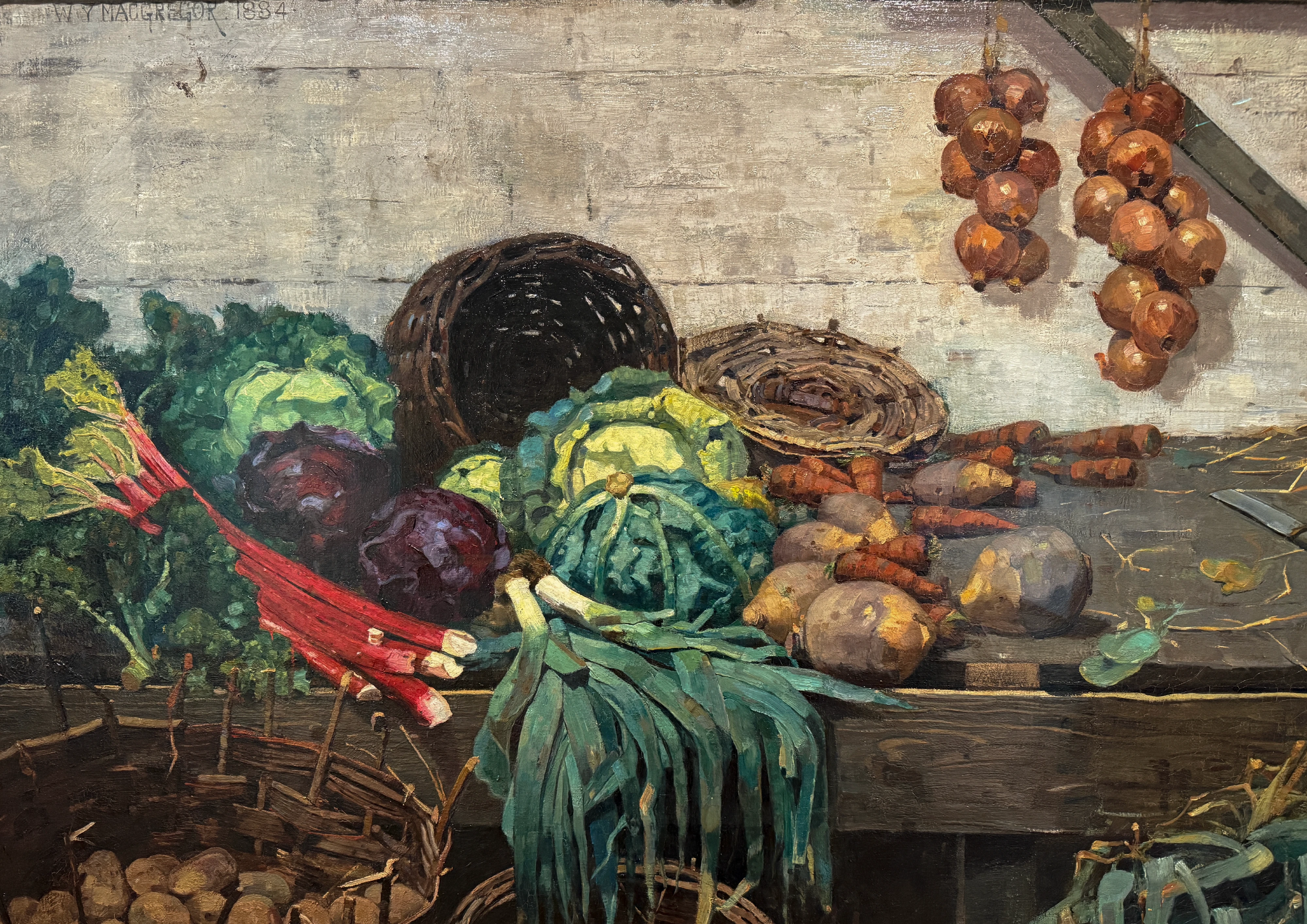
Five of them held me longer than the rest, and I want to set them down here. They have something in common. Walk into a botanical garden and the first thing you notice is the flowers, the ones with a colour that pulls the eye, red, yellow, pink. The greens, the leaves and grasses and cacti, tend to stay in the background, there to make the flowers the subject. It is the same way the buildings around Big Ben or the Eiffel Tower drop back into scenery so the landmark can shine. These five paintings do the opposite. They make the background the subject. The green that always gets pushed to the back walks into the middle of the frame. That, really, is where Magritti began.
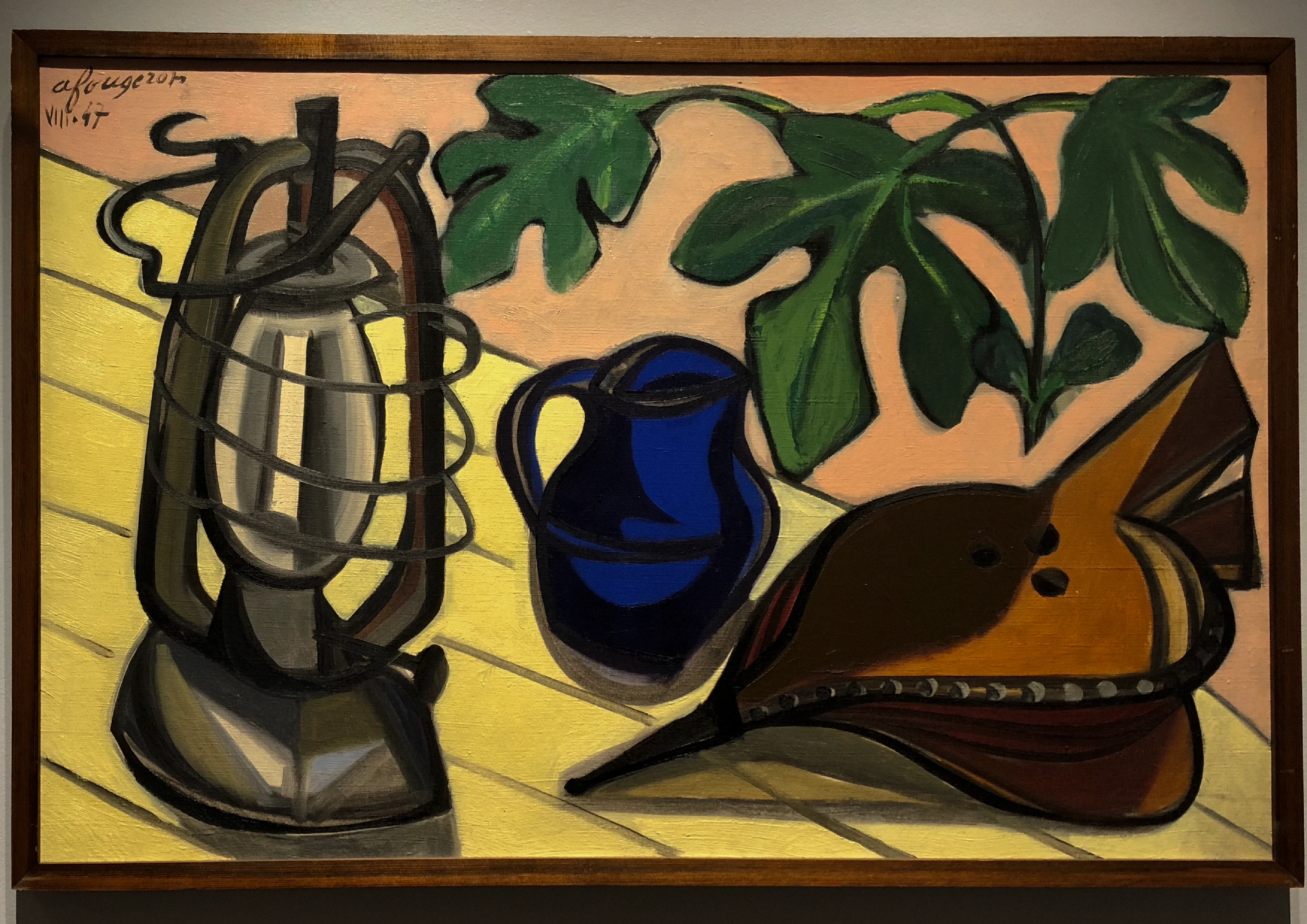
Крестьянский натюрморт (Peasant Still Life), André Fougeron, 1947. Gallery of 19th and 20th Century European and American Art, Pushkin Museum, Moscow.
Matisse came to mind first. But this sat closer to Fauvist colour crossed with something out of modern graphic design. What stayed with me most was the leaves: the way their shapes were pared down and the colour packed into them. It looked like a realist plant study that had taken one step into whatever comes next.


Cardón, State of Oaxaca, José María Velasco, 1887. 'A View of Mexico', The National Gallery, London.
The most commanding cactus I have ever seen painted. Not because of its scale against the small figure sheltering in its shade below, but because of how it sits, dead centre, taking up almost the whole canvas. There is no bright colour to speak of, almost nothing but green, and it still holds your eye. That has to be the shape. It is a single cactus, not even a large tree, and yet its weight reaches you straight through the painting.
Mafaffa Leaves, José María Velasco, Date unknown. 'A View of Mexico', The National Gallery, London.
The wall label said it showed Velasco's love of Mexican plants, and his hand: the choice of colour, the brushwork. But the technical side was not what held me. The painting is thought to be unfinished, and perhaps that is why what I saw in it was a kind of UI. The left half shows the whole thicket. The right keeps only the mafafa leaves, floating against a blank, paperwhite ground. My own work had always felt empty when I drew the hero plant alone with nothing behind it, and here was a way out of that.
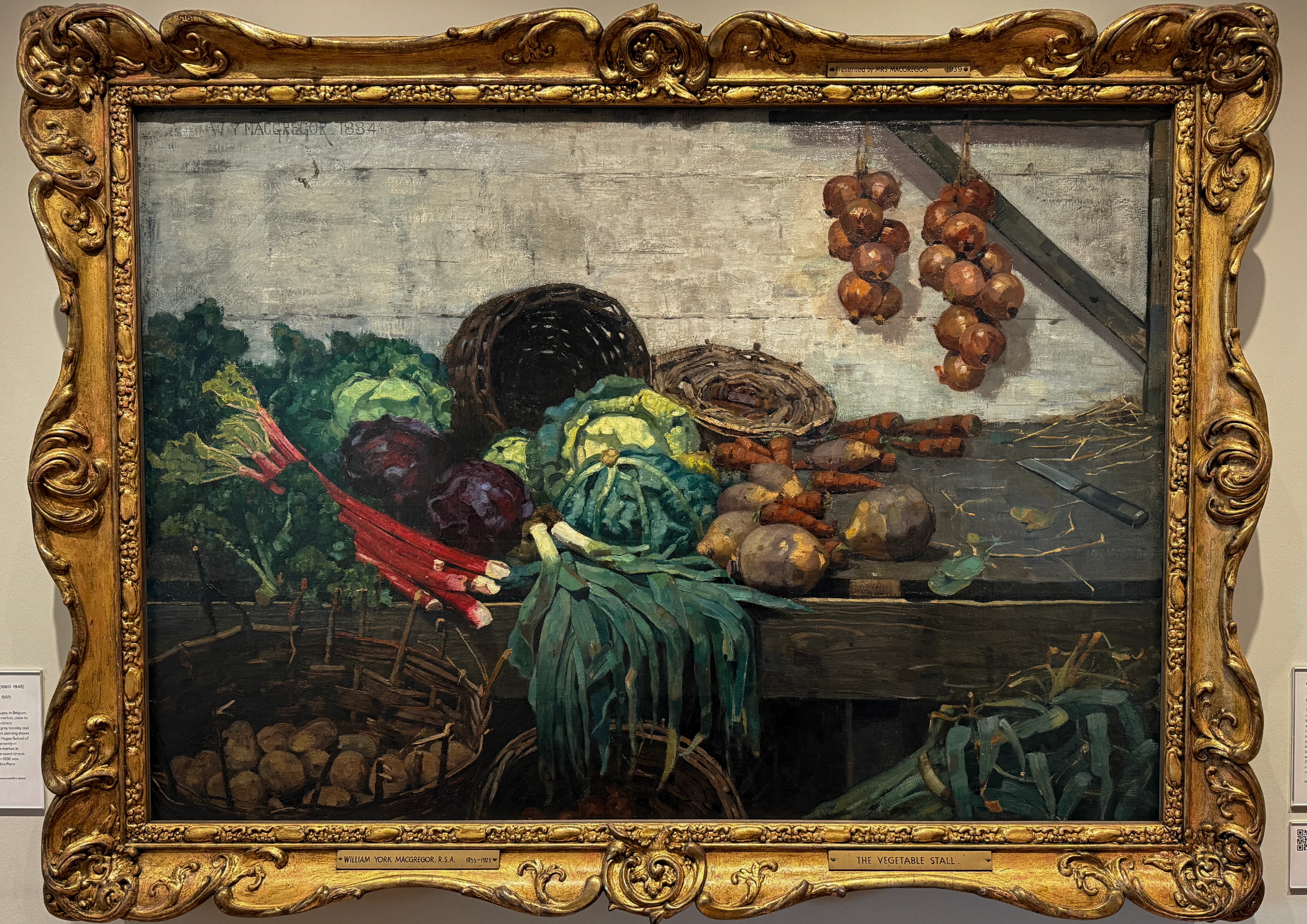
The Vegetable Stall, William York Macgregor, 1884. National Galleries of Scotland, Edinburgh.
A subject nobody would have looked at twice, blown up to fill the canvas. Not a simple still life. For one, the subject itself is different from the apples and oranges that stand in for the whole genre, Cézanne's especially. These are vegetables, plain and everyday, the sort that would not have qualified as a subject at the time, left in a loose heap on a market stall. 'You painted this, of all things? That is exactly what makes it stand out,' I thought. I found out later that Macgregor first painted a market girl counting her takings on the right, then removed her, handing the whole frame to the vegetables. Everything I liked about the painting was already there in that decision.
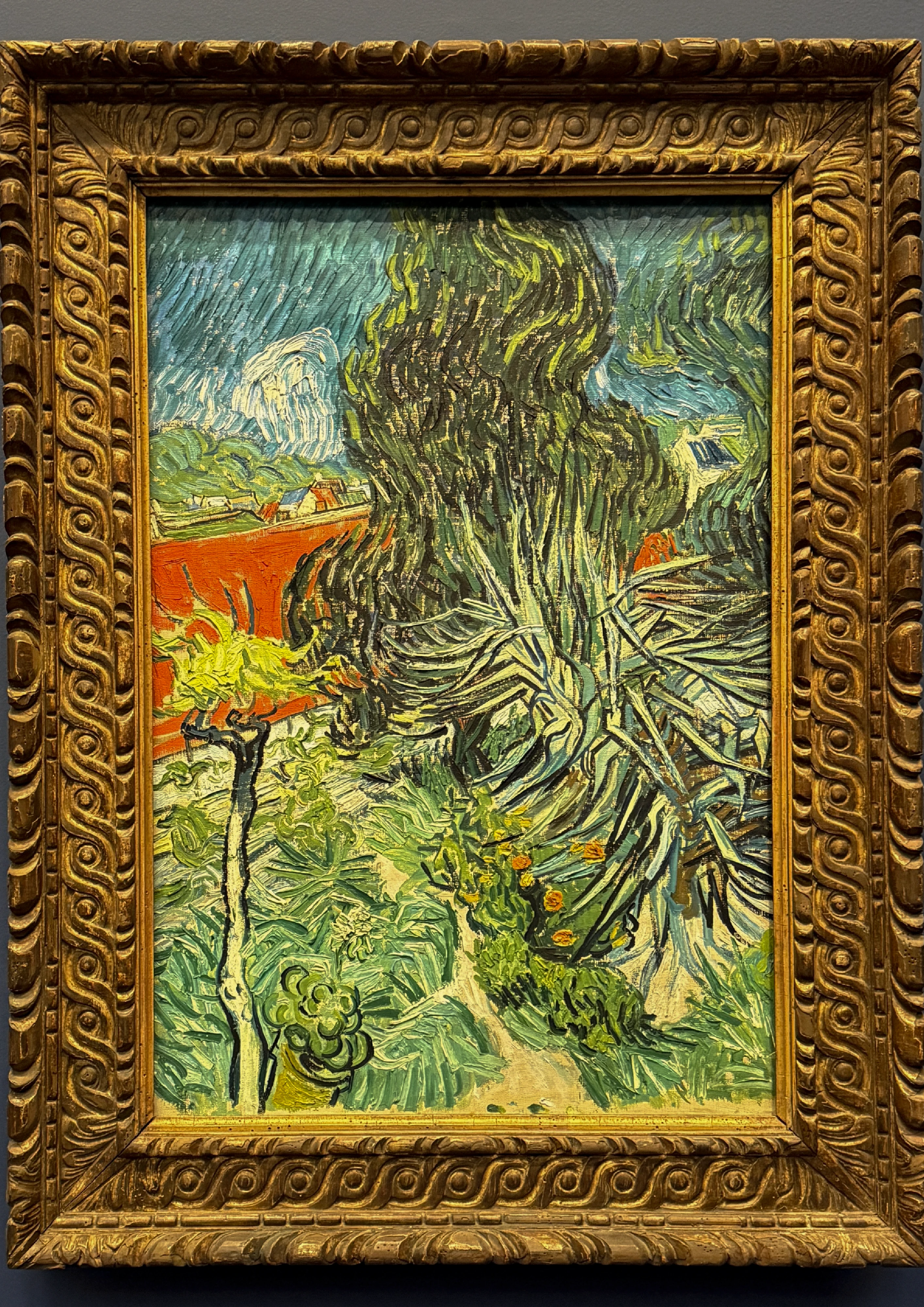
Dans le jardin du docteur Paul Gachet, Vincent van Gogh, 1890. Musée d'Orsay, Paris.
On the top floor of the Musée d'Orsay, in the Impressionist and Post-Impressionist rooms, this one caught my eye precisely by being the plainest green in the room. It was on display alongside the bright flower paintings of Cézanne, Monet, Renoir and Gauguin, and even some of Van Gogh's own. Take away the red garden wall and all that is left is green foliage. And yet the matte slabs of paint and the rough handling, both unmistakably his, show that colour was never the point. The grass and trees push out in every direction, and what comes through is simply that: the freedom of how they grew.
Looking back at the five, what held me was always the thing meant to stay in the background.
The greens, the leaves, the vegetables on the stall, all of them supposedly there to serve the main event. Magritti started from that way of looking. Take what everyone calls the background, set it in the middle, and pay attention. That is where I find beauty, and it is what I want to bring to the work.