Trees
Hermann Hesse, read again in four places.
Category
Words by
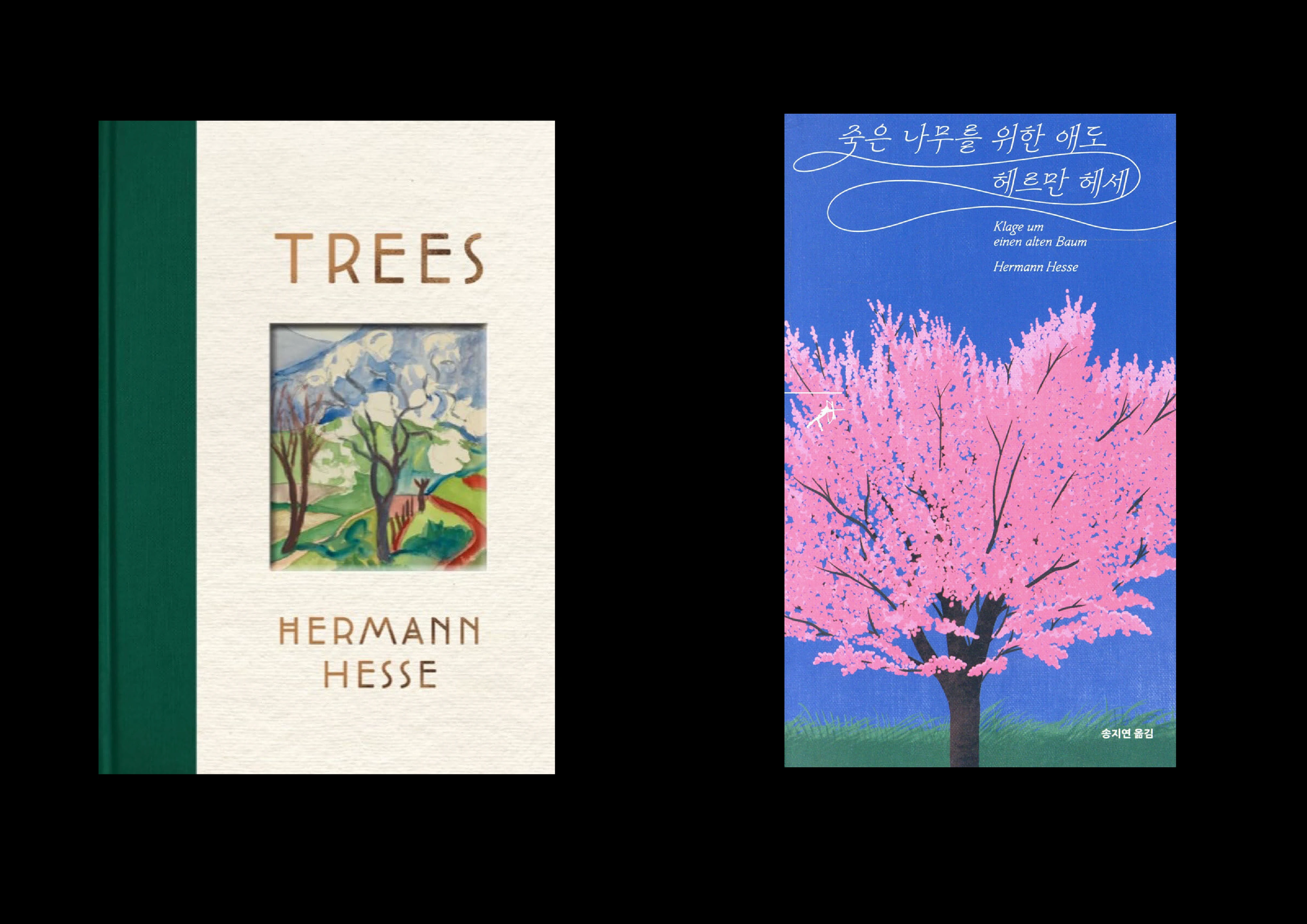
I read Hermann Hesse's Trees in 2023. It came back to me years later, while I was working out what Magritti was going to be. He had got a whole book out of trees and nothing else, and everything I was starting to think, he had thought first. So I went back to the fragments saved in my phone.
"If only we could store up a bagful of every beautiful thing and save it until we had need of it!" (Linden Blossoms, p. 61)
That is what Magritti does. It picks up what it finds beautiful and puts it somewhere it can be reached for later. Hesse had wanted the same thing a century earlier and had already worked out that it cannot be done.

Marrakech
"always, though, an excess of beauty surrounds us. That is the splendid thing about all our joys: they come unearned and undeserved, they cannot be bought or corrupted, they are free, a gift of God to everyone, like the fragrance of linden blossoms in the breeze" (Linden Blossoms, p. 62).
Nothing has to be invented, because it is already outside waiting.
In 2024 I went to the Jardin Majorelle in Marrakech. Jacques Majorelle laid it out in the 1920s; Saint Laurent bought it in 1980 to stop it being demolished, and his ashes are there now. Terracotta walls with creepers over them holding the heat, pink and red flowers out along the top, tiles chequered in dark navy and dark green, ochre earth, a building painted a blue that exists nowhere else, yellow columns and yellow curtains, cacti at every scale from pebble to two storeys.
What I kept looking at were the palms. They went up and did not stop. They grow close together, and yet at the top every crown holds its distance from the next.
I had assumed the planting was there to set off the blue house. Under the palms it was the other way round. The house was the backdrop.
Giverny
"These two trees, in their wonderful opposition, care nothing for oppositions. No natural things do. Each is sure of itself and its own rights; each is strong and stubborn" (Opposites, p. 83).
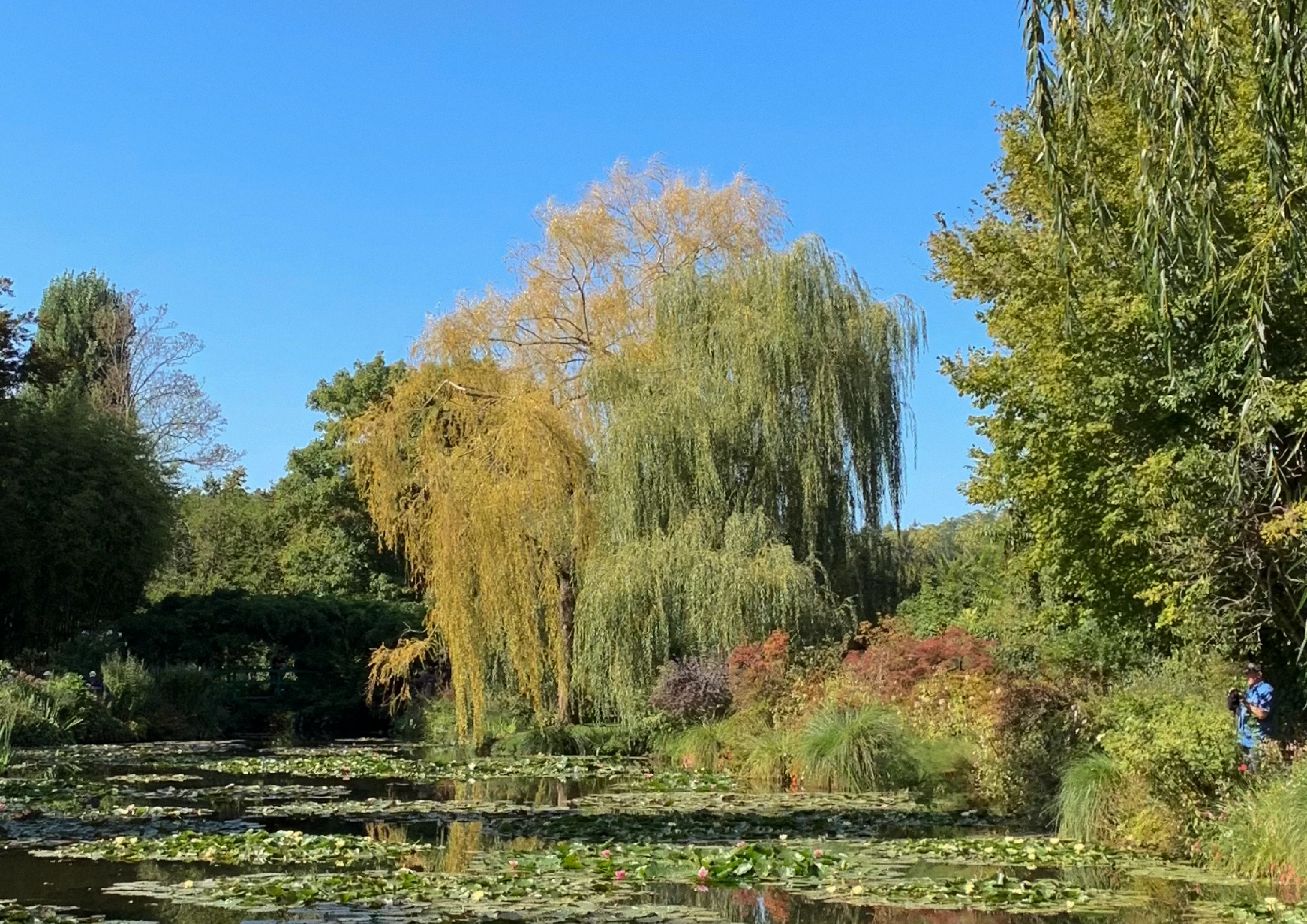
September 2019, the water lily pond at Giverny. Two weeping willows at the far end of the water, one turned yellow and one still green, their branches hanging into each other so that from across the pond they read as a single tree in two colours. Neither had come halfway to meet the other. They were not the same, they had no intention of becoming the same, and the thing held.

Sossusvlei
"I worship and adore them when they live in families and tribes, in forests and groves—and even more when they stand alone. They are like solitary people. Not hermits who've stolen away from society out of some weakness, but great, lonely people, like Beethoven or Nietzsche" (Trees, p. 1).
October 2025, Sossusvlei. An hour of driving on sand, then the car left at the end of the track and twenty minutes over the dune on foot. Deadvlei is a white clay pan at the bottom of it, and on the pan are camel thorns that died nine hundred years ago. Too dry to rot, they are black against the clay, and each one holds a wide distance from the next.
They did not look dead. The water went nine centuries ago and these are the only things left saying anything ever happened here, which they have gone on doing alone for a thousand years.
Richmond
"I didn't want to. Let the place stand empty" (The Peach Tree, p. 38).
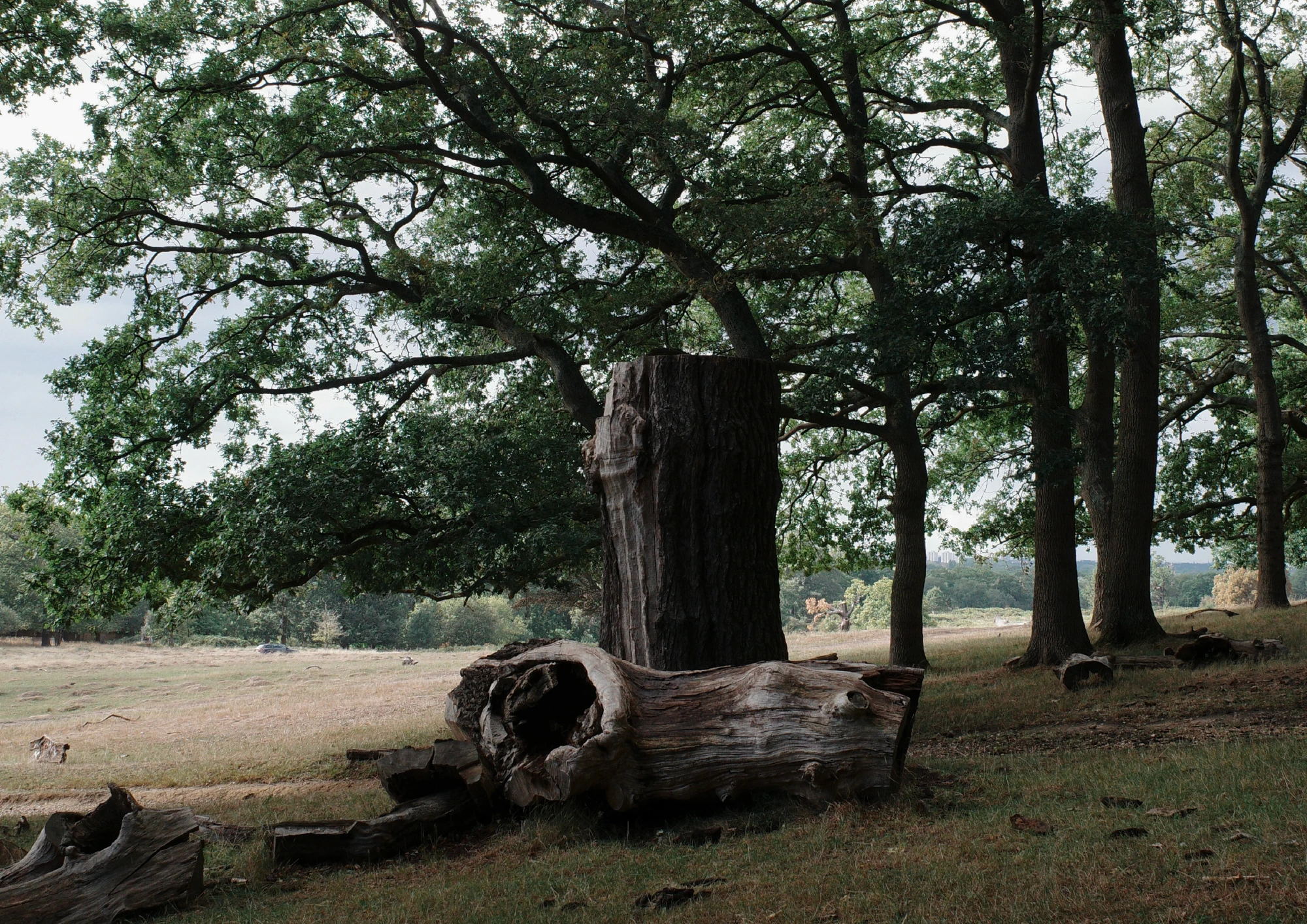
September 2025, Richmond Park. What caught me were the dead trees. Some had been struck by lightning and left where they burned. One lay in the long grass, hollow through the trunk, taken over by squirrels and by children. Another had been cut at the base with the roots still showing, and beside it the ground was open where the tree had come out.
None of it had been tidied. The living trees carried on around them. British parks do this deliberately, because a dead tree holds more life than a living one, so it stays where it fell and the ground it opened is left open.
"It so rarely happens, and is so precious when it does: vaulting over to the other side for once, breathing the clear morning air of first youth, and seeing the world once more, for a moment, as it came from God's hands—as we all saw it when we were children, when the miracle of strength and beauty was unfolding within ourselves" (The Miracle of Rebirth, p. 20).