Merch with Painted Flowers
Format
Apparel · Campaign
Location
London · Seoul
Disciplines
Brand Strategy · Campaign · Art Direction · Product Design · Print Production
Role
Creative Strategist · Designer · Producer
Context
Clothing was one of the ways Magritti set out to put across how it sees plants and nature. A garment carries a studio the way key art carries a film: the piece that travels, that brings people to the work. A shirt goes out into the day with the person wearing it.
Making clothing also meant running Magritti as a full business for the first time. It works without a client or outside capital, so a product had to be carried in-house from end to end: research, design, production, launch and retail. The garment would be built from the pattern up and carried through to the shop, which meant sizing, sampling, labelling, packaging and business registration all had to be handled directly.
The audience came first. Looking back over how Magritti's posts had been received, response ran highest among women in their twenties and thirties, so the first product was set for that group, with the fit kept unisex in wear. The floral motifs sat with that reading rather than leading it.
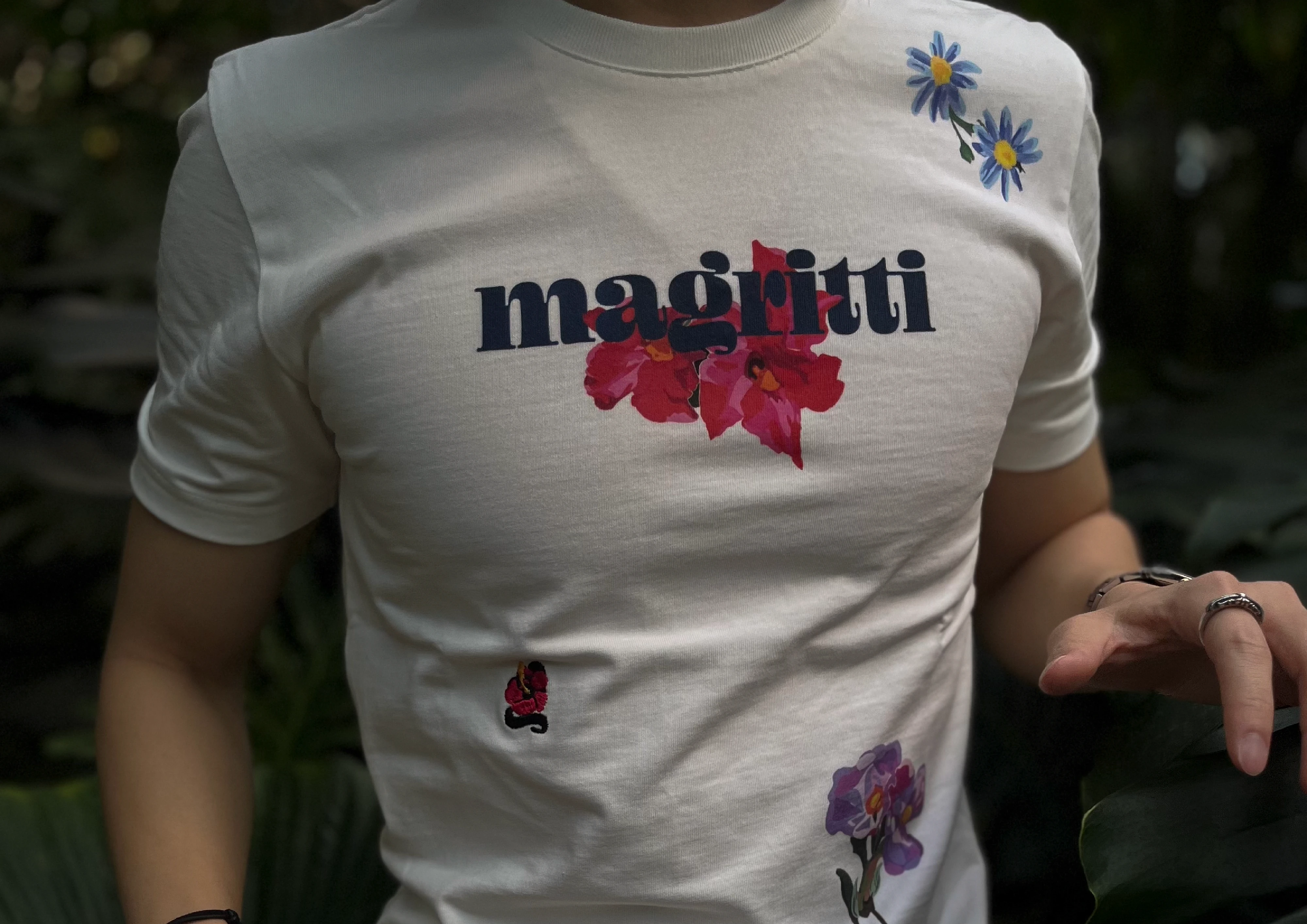
The work ran across two cities and two markets, with a team of five between London and South Korea and work shared across both. Three flowers from the painting archive went onto a cotton shirt cut to its own pattern and measurements, taken to retail in the UK and South Korea as a registered business. The point was to get the brand out of the studio and onto something people would keep.
Strategy
Let one garment stand in for the brand in public, and run the full cycle behind it, from research to retail.
Execution
Research — The moodboard was pulled from film posters, book covers, botanical plates, album covers, aircraft liveries and market stalls. Fabric came from the wholesale markets. Swatches were compared for weight and hand, and a white cotton was chosen.
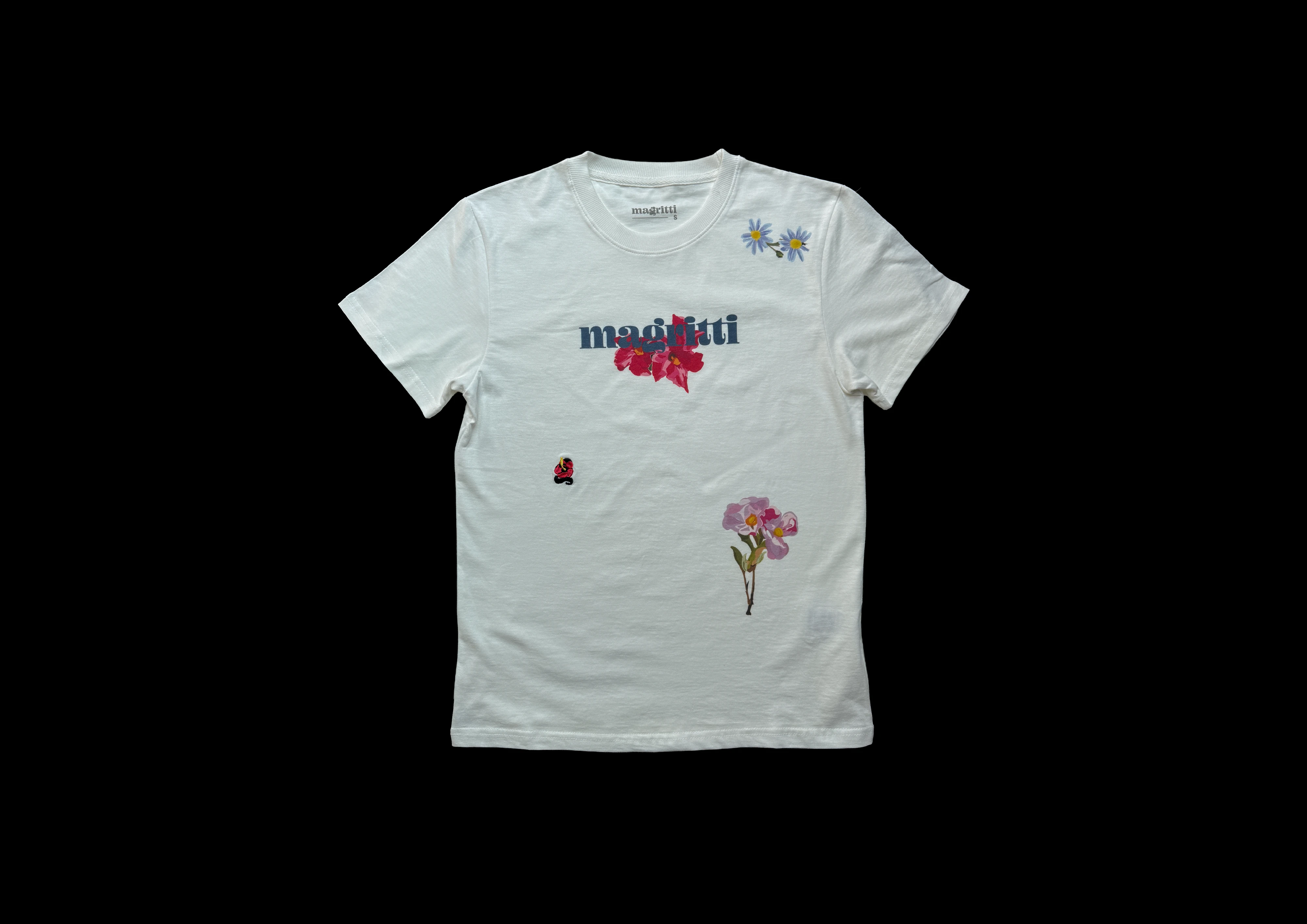
Design — The shirt was cut from its own pattern in two sizes, every measurement drafted by hand. Three flowers were painted in digital conte crayon and printed in DTP. The magritti logo went in as embroidery.
Produce — A tech pack went out. A first sample came from China, then the studio ran the costs and moved production to South Korea. Three rounds of correction, then a run of 133 pieces.
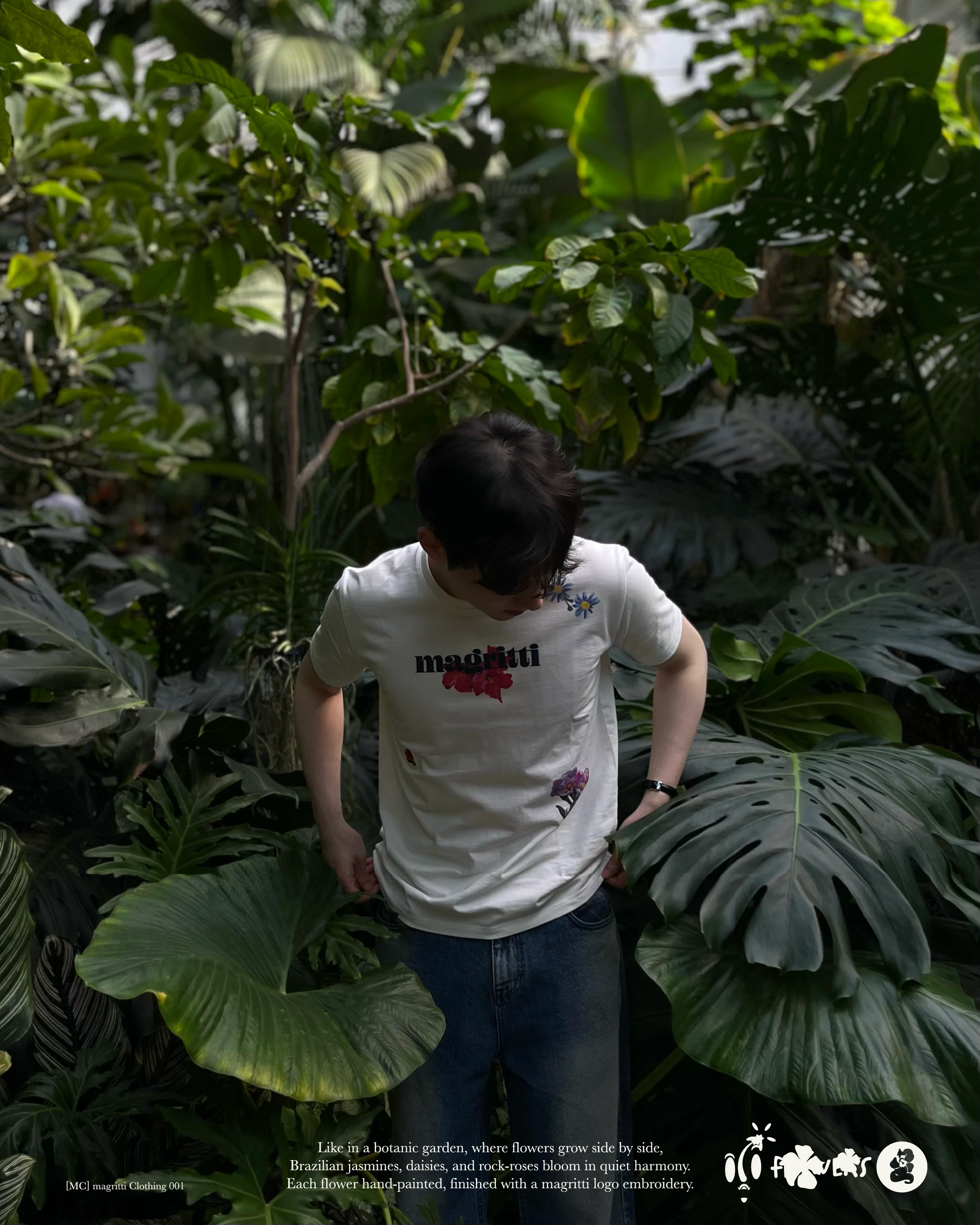
Launch — A reel trailed the release. The launch was carried by a key visual on Instagram. Shirts were seeded to the team and to people close to the studio, whose UGC put the release into circulation.
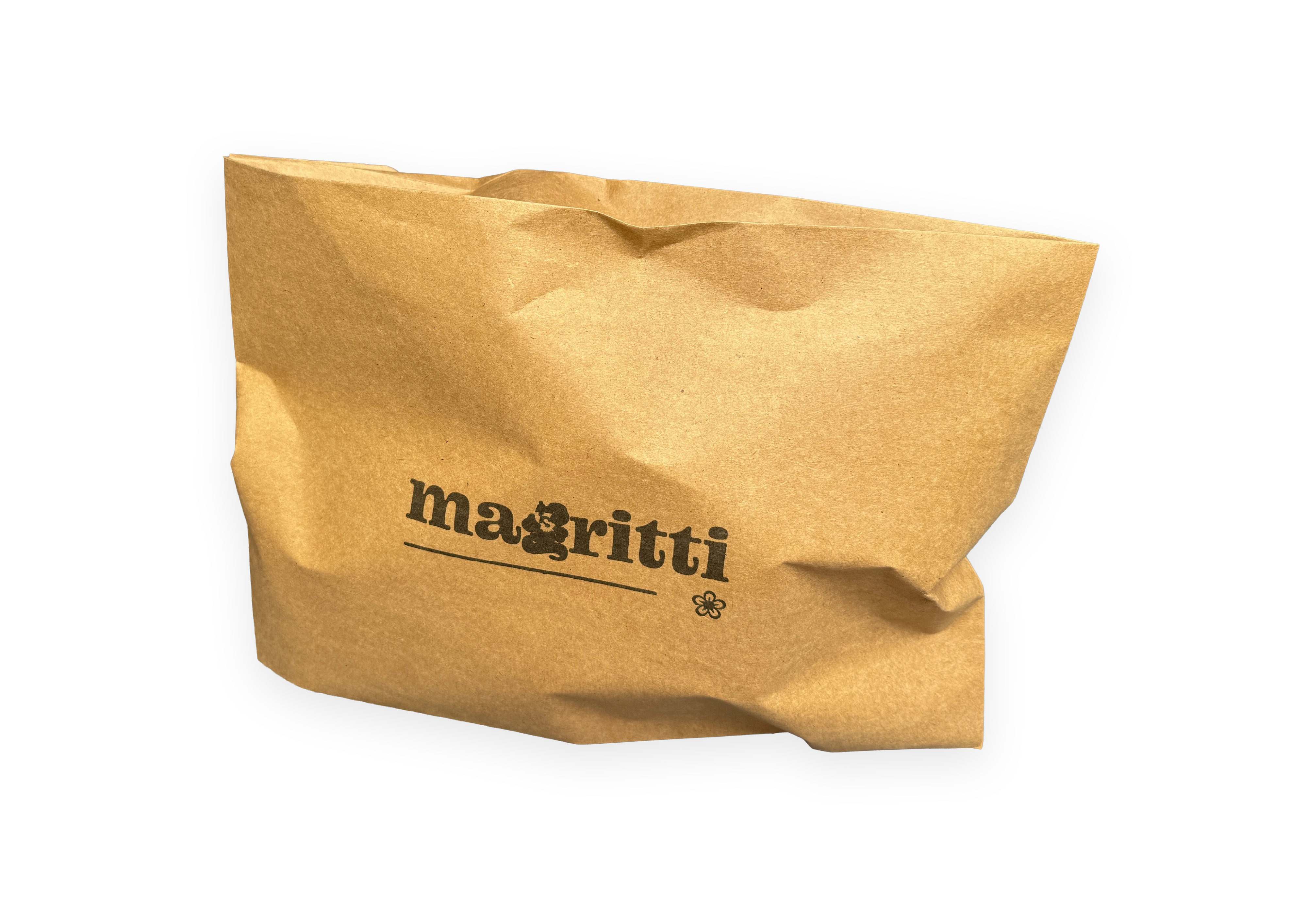
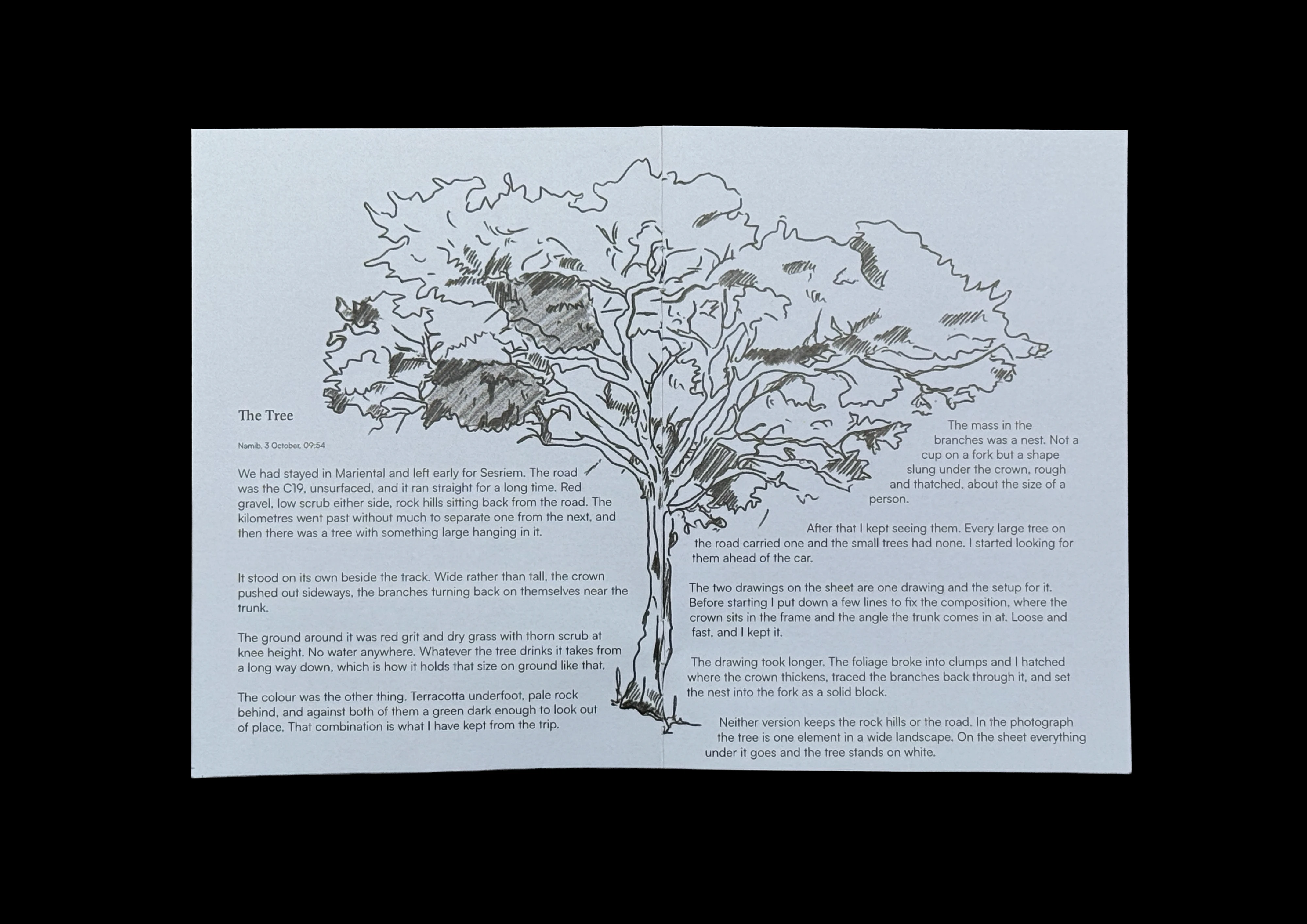
Retail — Magritti registered as a business in South Korea and moved the stock into the UK as commercial goods. Orders shipped in a printed mailer with a postcard enclosed. The shirt sold in the UK and South Korea.
Context
Clothing was one of the ways Magritti set out to put across how it sees plants and nature. A garment carries a studio the way key art carries a film: the piece that travels, that brings people to the work. A shirt goes out into the day with the person wearing it.
Making clothing also meant running Magritti as a full business for the first time. It works without a client or outside capital, so a product had to be carried in-house from end to end: research, design, production, launch and retail. The garment would be built from the pattern up and carried through to the shop, which meant sizing, sampling, labelling, packaging and business registration all had to be handled directly.
The audience came first. Looking back over how Magritti's posts had been received, response ran highest among women in their twenties and thirties, so the first product was set for that group, with the fit kept unisex in wear. The floral motifs sat with that reading rather than leading it.
The work ran across two cities and two markets, with a team of five between London and South Korea and work shared across both. Three flowers from the painting archive went onto a cotton shirt cut to its own pattern and measurements, taken to retail in the UK and South Korea as a registered business. The point was to get the brand out of the studio and onto something people would keep.
Strategy
Let one garment stand in for the brand in public, and run the full cycle behind it, from research to retail.
Execution
Research — The moodboard was pulled from film posters, book covers, botanical plates, album covers, aircraft liveries and market stalls. Fabric came from the wholesale markets. Swatches were compared for weight and hand, and a white cotton was chosen.
Design — The shirt was cut from its own pattern in two sizes, every measurement drafted by hand. Three flowers were painted in digital conte crayon and printed in DTP. The magritti logo went in as embroidery.
Produce — A tech pack went out. A first sample came from China, then the studio ran the costs and moved production to South Korea. Three rounds of correction, then a run of 133 pieces.
Launch — A reel trailed the release. The launch was carried by a key visual on Instagram. Shirts were seeded to the team and to people close to the studio, whose UGC put the release into circulation.
Retail — Magritti registered as a business in South Korea and moved the stock into the UK as commercial goods. Orders shipped in a printed mailer with a postcard enclosed. The shirt sold in the UK and South Korea.
Context
Clothing was one of the ways Magritti set out to put across how it sees plants and nature. A garment carries a studio the way key art carries a film: the piece that travels, that brings people to the work. A shirt goes out into the day with the person wearing it.
Making clothing also meant running Magritti as a full business for the first time. It works without a client or outside capital, so a product had to be carried in-house from end to end: research, design, production, launch and retail. The garment would be built from the pattern up and carried through to the shop, which meant sizing, sampling, labelling, packaging and business registration all had to be handled directly.
The audience came first. Looking back over how Magritti's posts had been received, response ran highest among women in their twenties and thirties, so the first product was set for that group, with the fit kept unisex in wear. The floral motifs sat with that reading rather than leading it.
The work ran across two cities and two markets, with a team of five between London and South Korea and work shared across both. Three flowers from the painting archive went onto a cotton shirt cut to its own pattern and measurements, taken to retail in the UK and South Korea as a registered business. The point was to get the brand out of the studio and onto something people would keep.
Strategy
Let one garment stand in for the brand in public, and run the full cycle behind it, from research to retail.
Execution
Research — The moodboard was pulled from film posters, book covers, botanical plates, album covers, aircraft liveries and market stalls. Fabric came from the wholesale markets. Swatches were compared for weight and hand, and a white cotton was chosen.
Design — The shirt was cut from its own pattern in two sizes, every measurement drafted by hand. Three flowers were painted in digital conte crayon and printed in DTP. The magritti logo went in as embroidery.
Produce — A tech pack went out. A first sample came from China, then the studio ran the costs and moved production to South Korea. Three rounds of correction, then a run of 133 pieces.
Launch — A reel trailed the release. The launch was carried by a key visual on Instagram. Shirts were seeded to the team and to people close to the studio, whose UGC put the release into circulation.
Retail — Magritti registered as a business in South Korea and moved the stock into the UK as commercial goods. Orders shipped in a printed mailer with a postcard enclosed. The shirt sold in the UK and South Korea.


Impact
The full cycle ran, from research to retail. Magritti designed the shirt, sourced and made it, carried it across a border and put it on sale under a registration taken out for the purpose. The shirt sold in the UK and South Korea, and the registration still stands behind the studio's name.